Knit+
.
A digital product passport for a
shared-wardrobe rental platform
A digital product passport for a
shared-wardrobe rental platform
Hogeschool van Amsterdam (HvA) | Amsterdam Fashion Institute (AMFI) Centre for Economic Transformation
2024-25
DIGITAL PRODUCT DESIGN |User research | Exhibition Design
.

Research: Dissecting the Ecosystem
Research: Dissecting the Ecosystem
Research: Dissecting the Ecosystem
From transaction to transformation
From transaction to transformation
Fast fashion is fast. That's the only thing it does well.
Fast fashion is fast. That's the only thing it does well.
The industry runs on take-make-dispose: overproduce, sell cheap, replace quickly. 92 million tonnes of textiles go to landfill every year.
The industry runs on take-make-dispose: overproduce
, sell cheap, replace quickly. 92 million tonnes of textiles
go to landfill every year.
Awareness isn't the bottleneck. People already know. They're stuck between the pull of fast fashion and the guilt of it, with no alternative that doesn't ask them to give something up cost, convenience, or looking like themselves.
Awareness isn't the bottleneck. People already know. They're stuck between the pull of fast fashion and the guilt of it, with no alternative that doesn't ask them to give something up cost, convenience, or looking like themselves.
Opportunity
Statement
Opportunity
Statement
Opportunity
Statement
How might we leverage a shared ownership business model to improve sustainable use and maintenance of fashion?
How might we leverage a shared ownership business model to improve sustainable use and maintenance of fashion?
How might we leverage a shared ownership business model
to improve sustainable use and maintenance of fashion?
shifting behaviour(s):
buying to borrowing
tracking wear and usage patterns/ extending life of the garment (building a digital footprint of the garment)
Scope of the project
We turned the MoSCoW exercise into an object: clothing tags printed with questions, sorted into must, could and won't, across four categories - business, production, sustainability, and sweaters, the product itself. It's easier to argue with a tag in your hand than a spreadsheet.
We turned the MoSCoW exercise into an object: clothing tags printed with questions, sorted into must, could and won’t, across four categories - business, production, sustainability, and sweaters, the product itself. It’s easier to argue with a tag in your hand than a spreadsheet.
We turned the MoSCoW exercise into an object: clothing tags printed with questions, sorted into must, could and won't, across four categories - business, production, sustainability, and sweaters, the product itself. It's easier to argue with a tag in your hand than a spreadsheet.
What we could realistically build in five months, decided with the stakeholders rather than for them.
What we could realistically build in five months, decided with the stakeholders rather than for them.
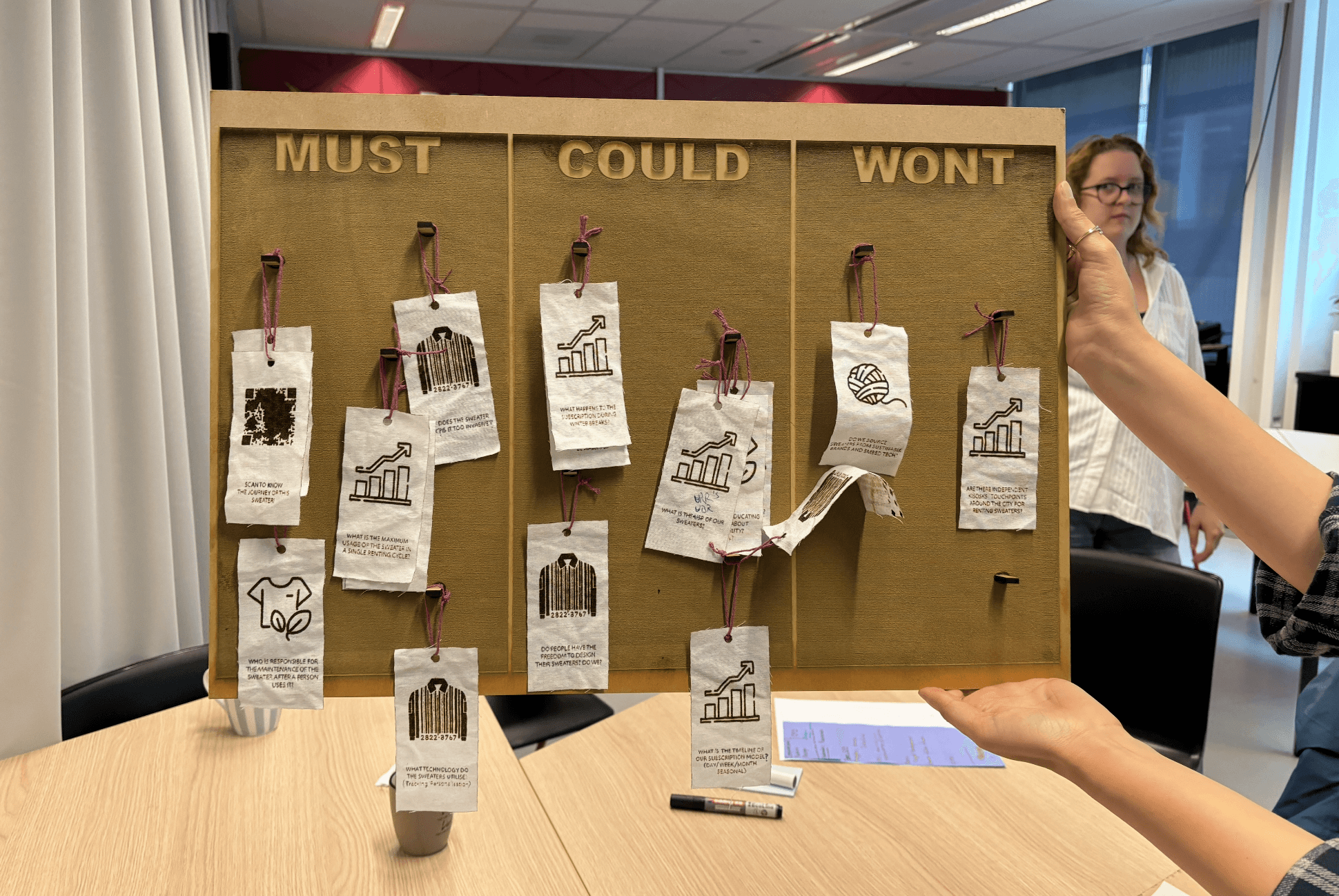
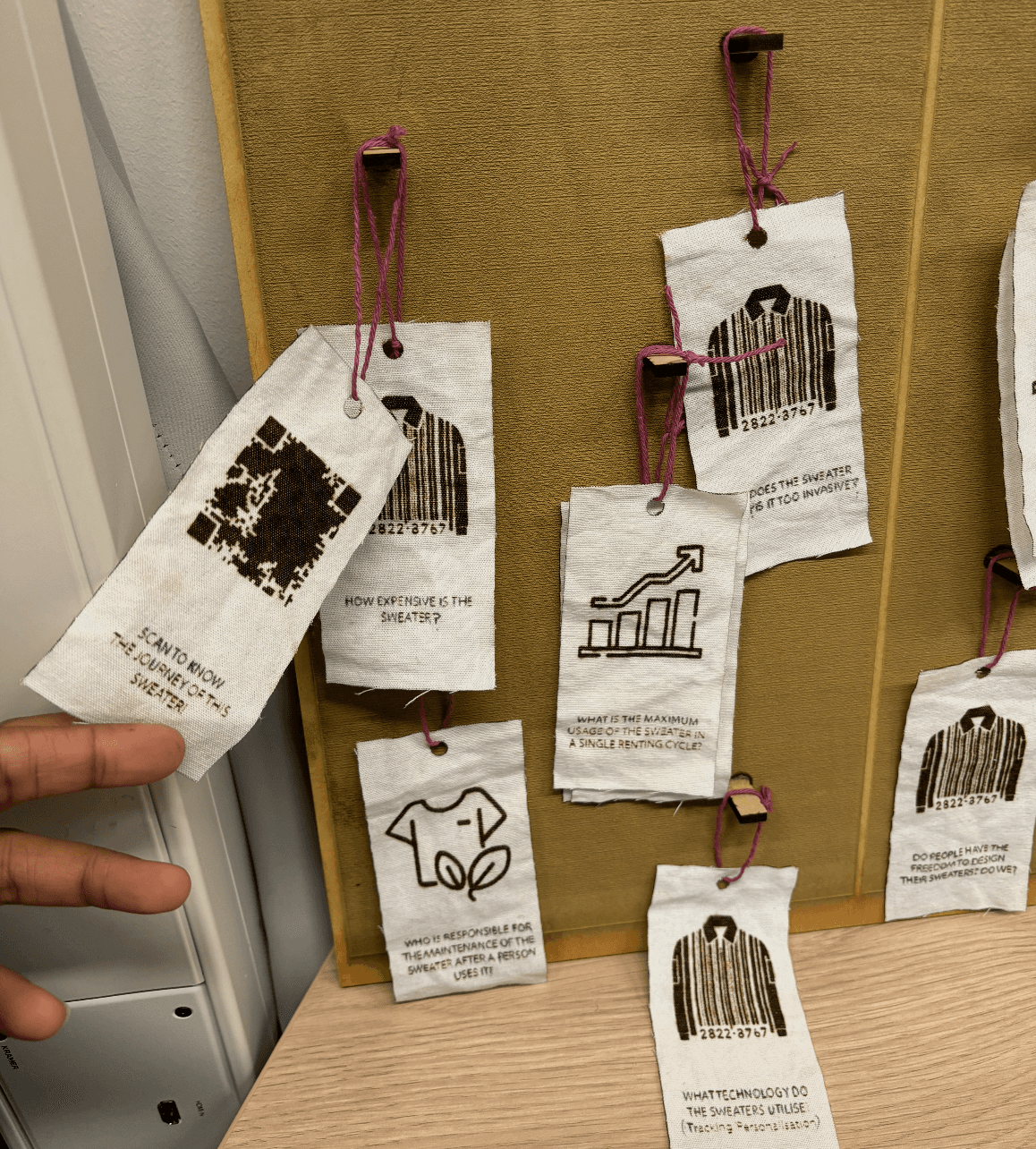
Using modified MoSCoW for clarity
Research Approach
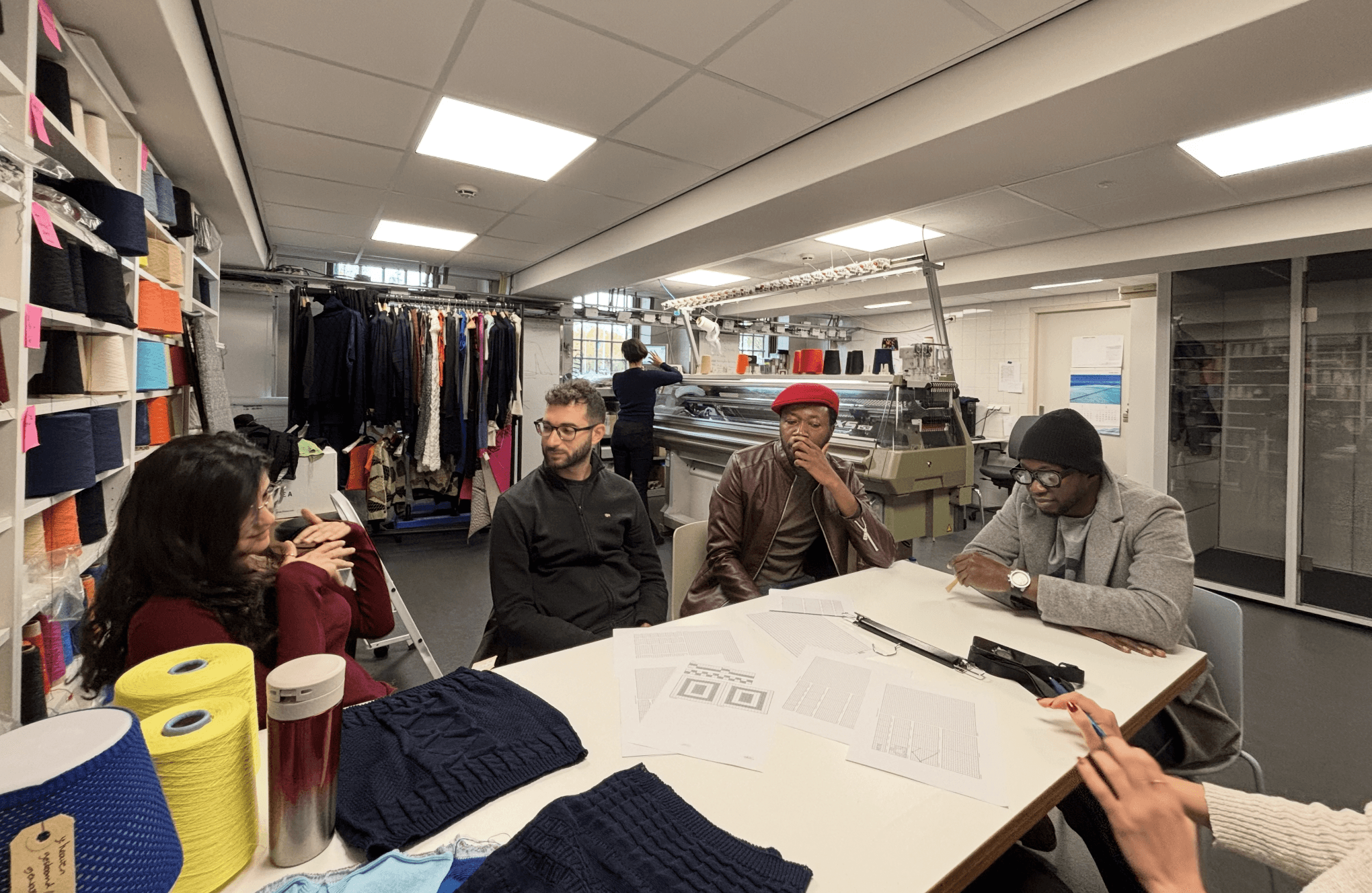
We swapped clothes instead of asking about them. Ask someone about their shopping habits and you get the answer they'd like to be true. So we went and watched instead.
Systemic analysis - desk research, a competitor teardown of rental platforms, and a lot of time in vintage stores mapping what already exists.
Human-centred insights - 15 in-depth interviews, social experiments, and expert interviews with rental founders and sustainability specialists, plus surveys, group discussions and Instagram polls.
Synthesis and validation - perception mapping to find the actual problem, then brainstorming, prototyping and testing until it held.
To ensure our insights were directly applicable, we narrowed our research to focus specifically on sweaters. This strategic decision aligned with our core product at knit+, a premium, high-quality sweater and allowed for a much deeper and more targeted investigation into user behavior.
To ensure our insights were directly applicable, we narrowed our research to focus specifically on sweaters. This strategic decision aligned with our core product at knit+, a premium, high-quality sweater and allowed for a much deeper and more targeted investigation into user behavior.
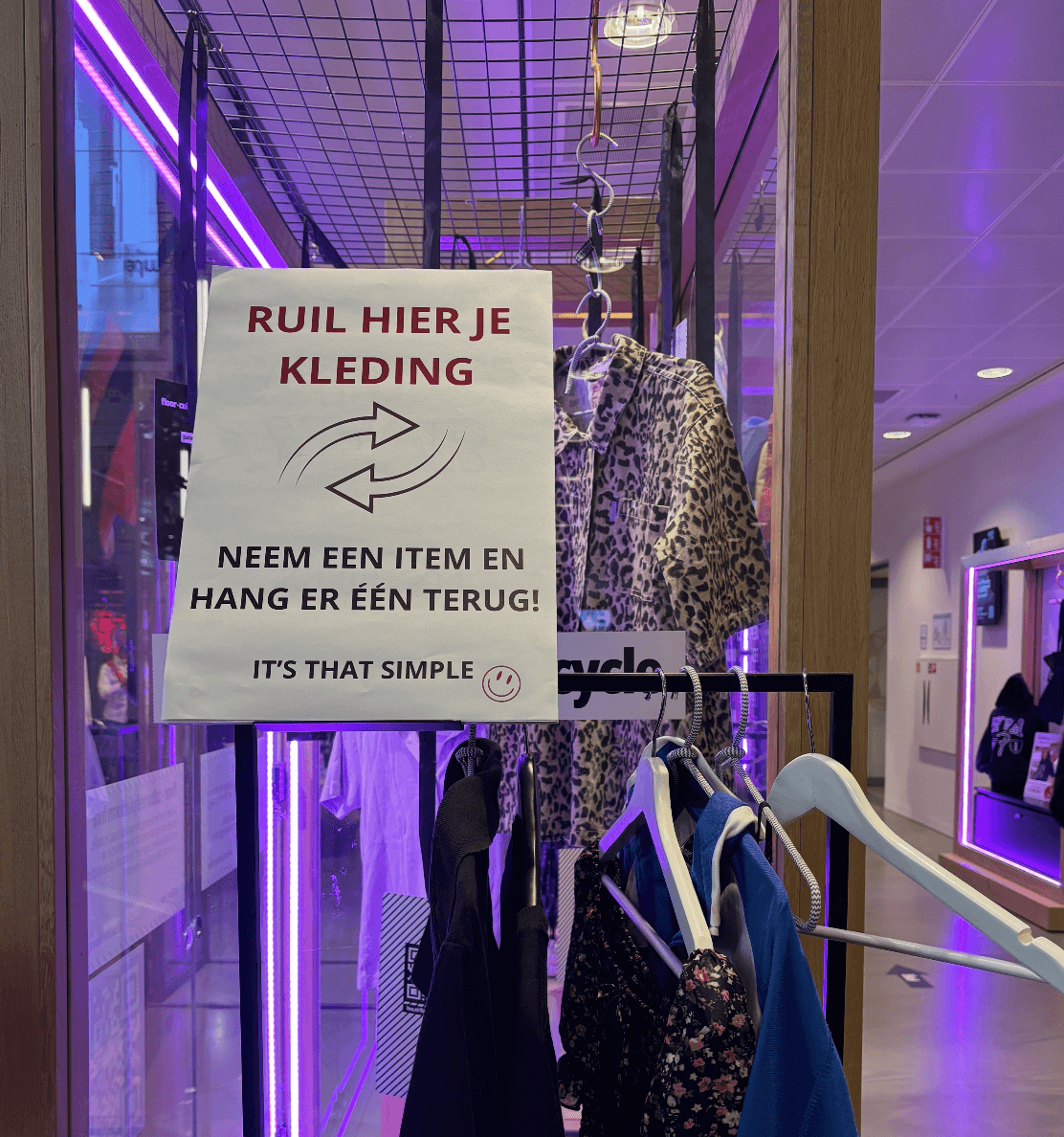
Field visits clothing swap
at the HvA university
Field visits clothing swap
at the HvA university
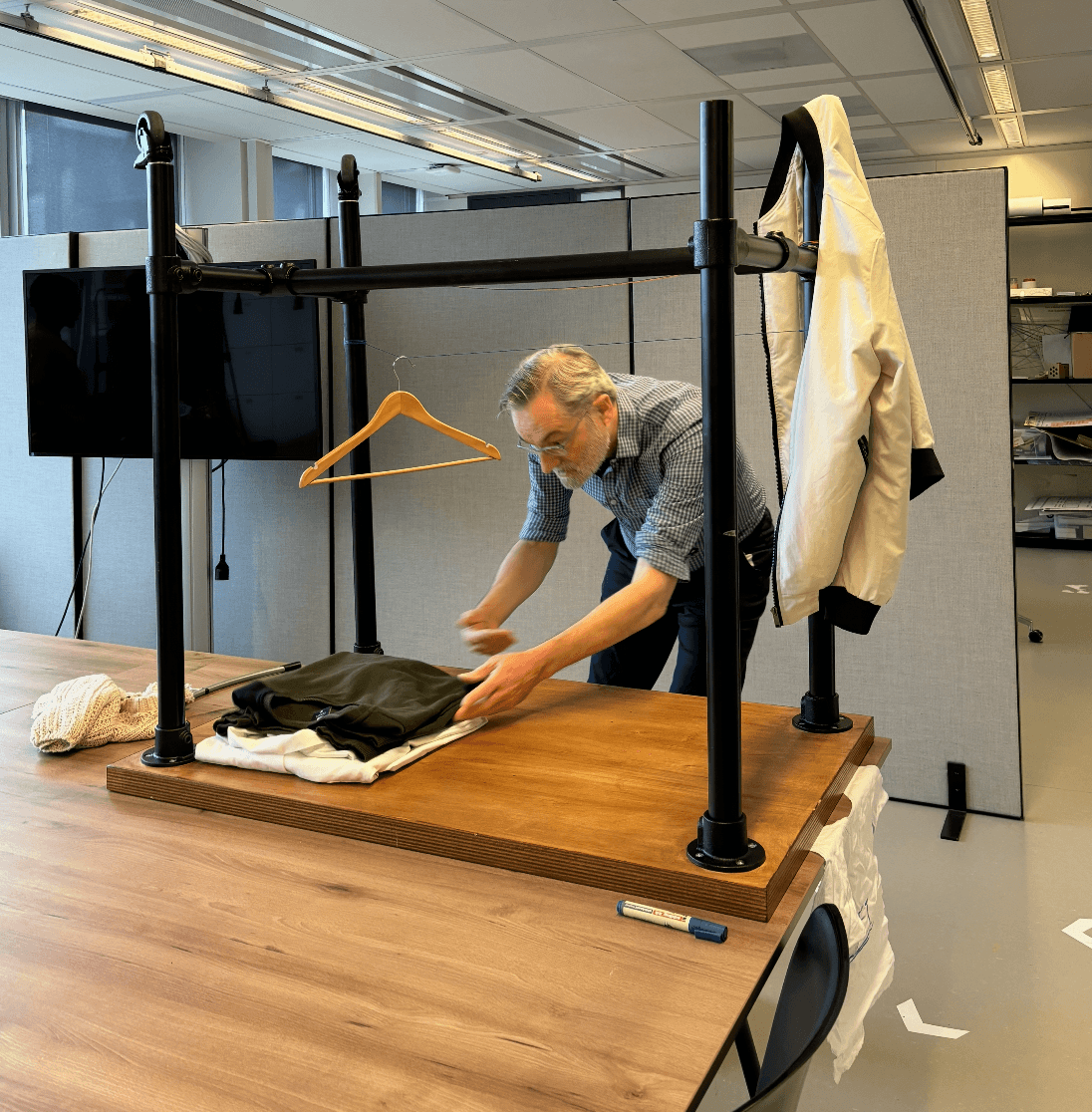
Experiment
"how people take care of their clothing"
Experiment
“how people take care of their clothing”
Experiment
"how people take care of their clothing"
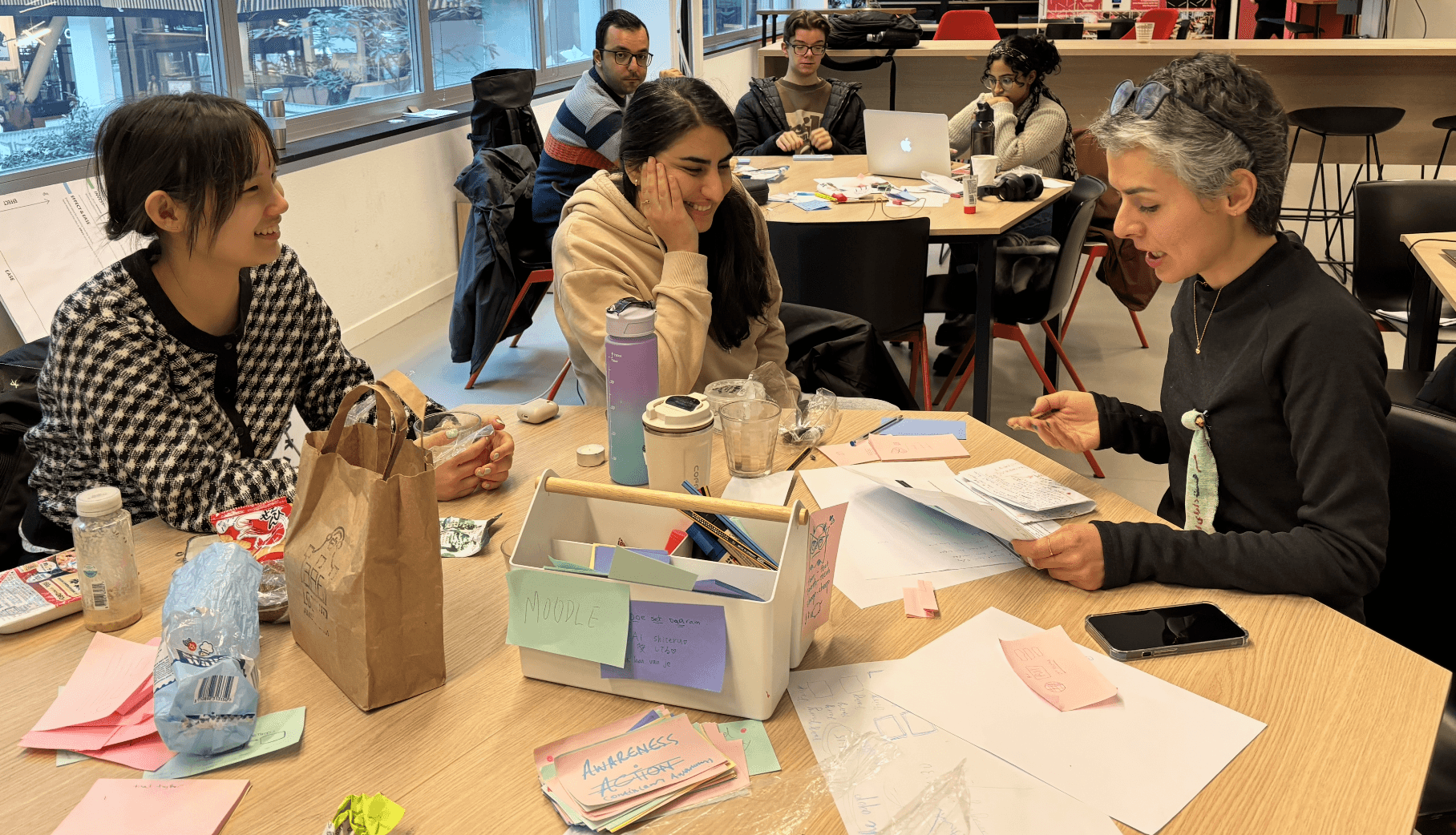
interviews - what actually drives buying and getting rid of clothes
interviews - what actually drives buying and getting rid of clothes
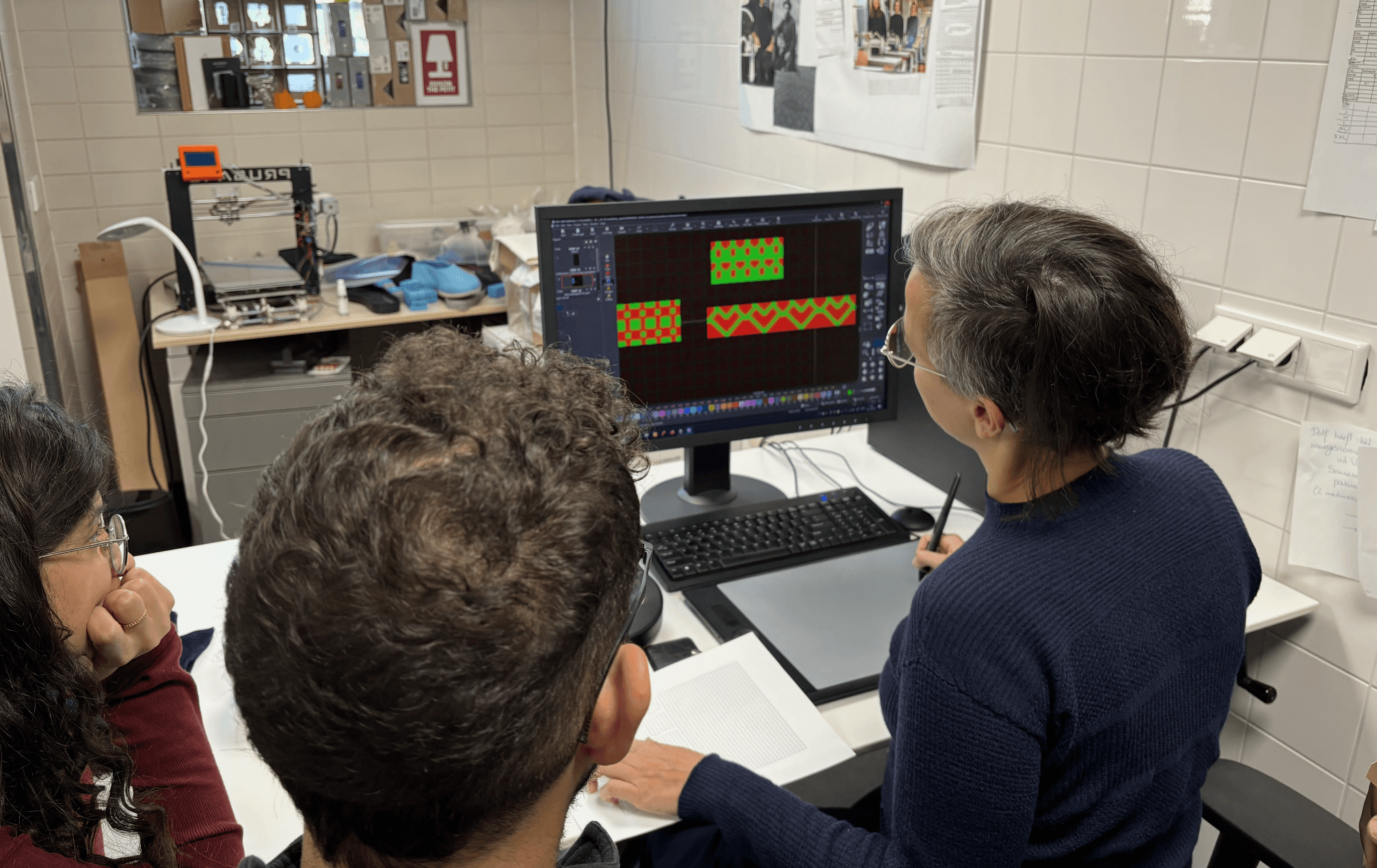
knitting machine team visit to understand the product and making/materials
knitting machine team visit to understand the product and making/materials
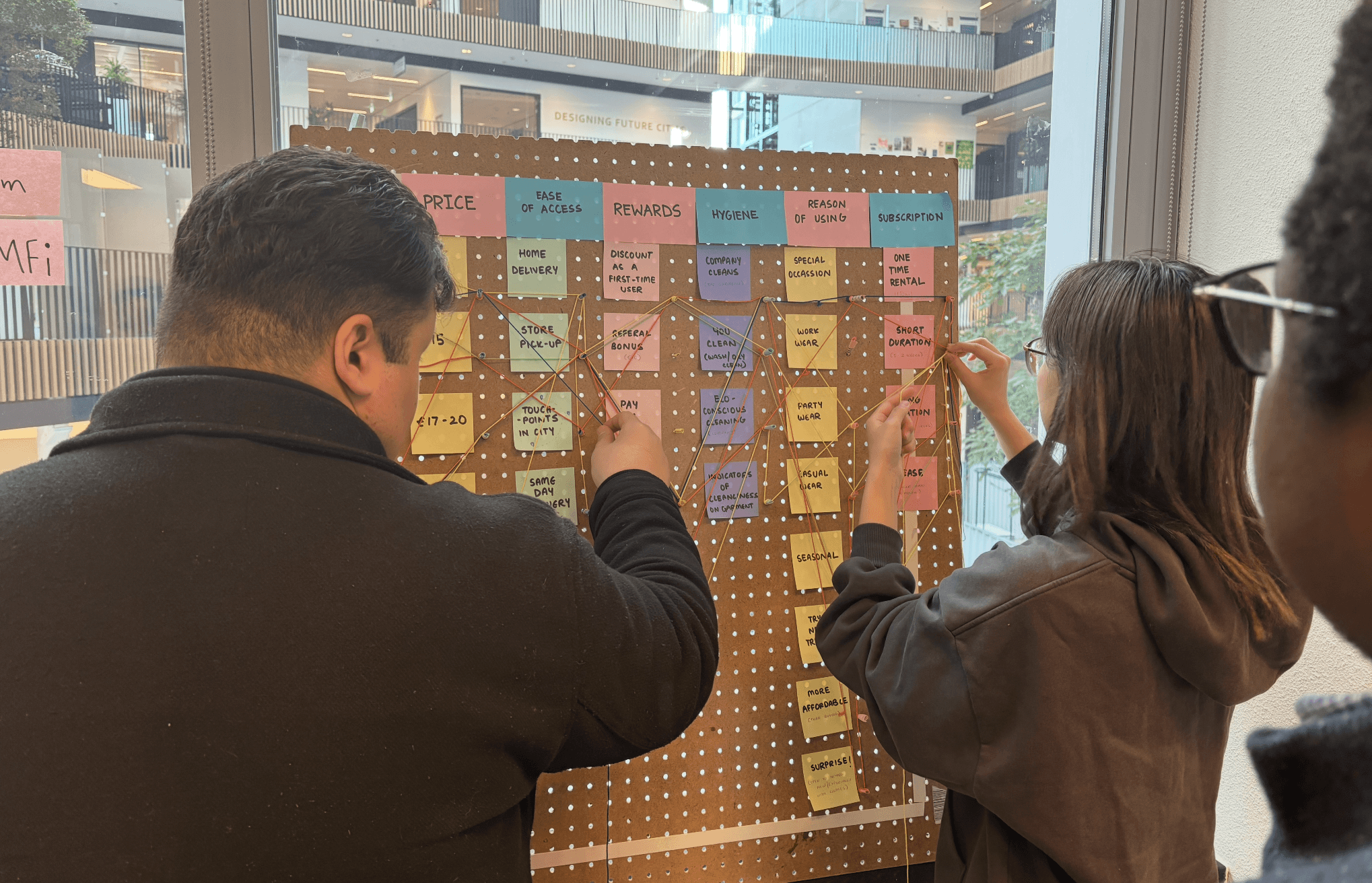
Data mapping — what makes renting worth it to people
Data mapping — what makes renting worth it to people
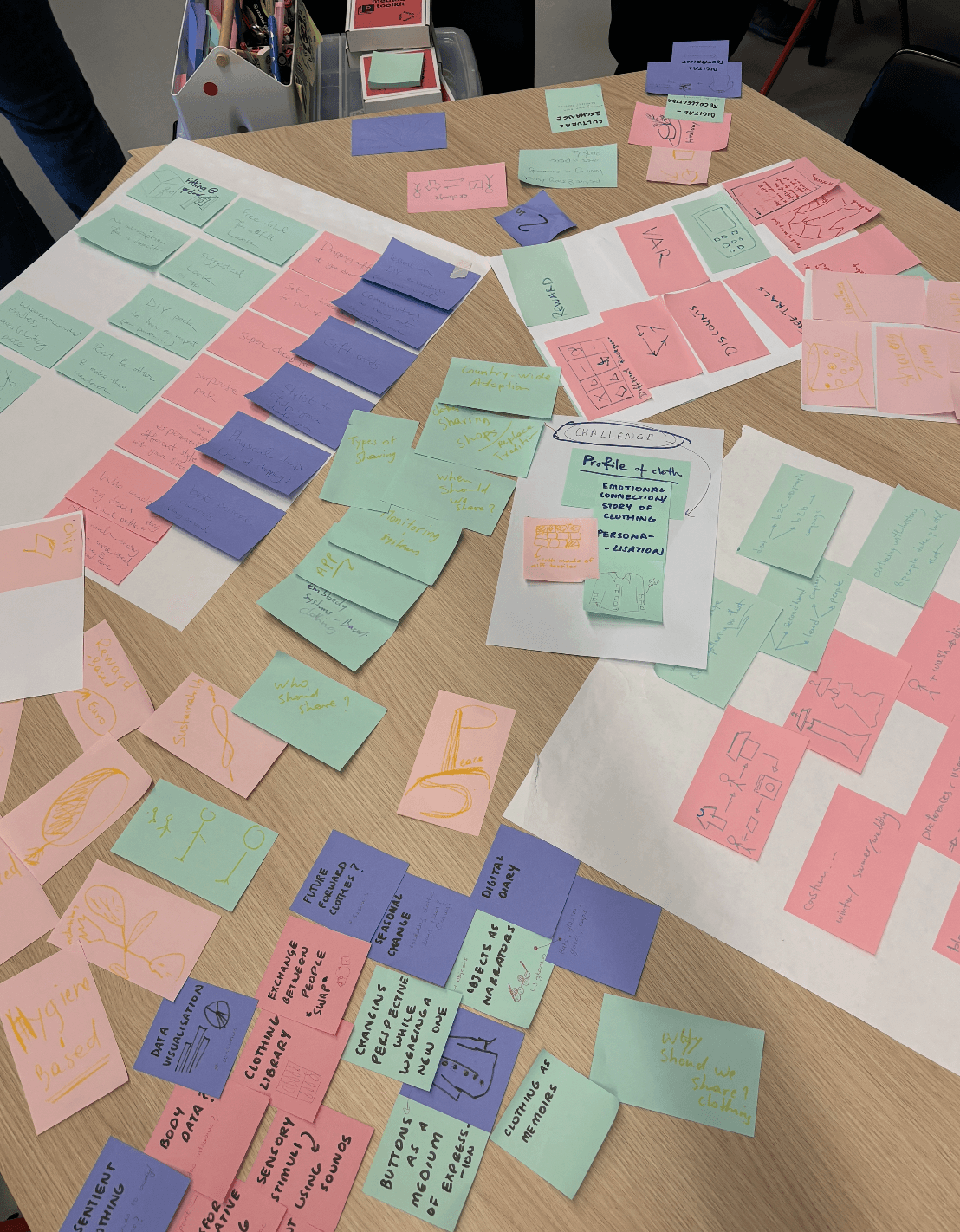
brainstorming possible areas of intervention
brainstorming possible areas of intervention
The Behavioural Challenge
The Behavioural Challenge
The Behavioural Challenge
Two major global forces reshaping the industry
A cultural shift from ownership to access, fueling growth in resale and rental markets
A cultural shift from ownership to access, fueling growth in resale and rental markets
From 2029, every garment sold in the EU has to carry its lifecycle data.
From 2029, every garment sold in the EU has to carry its lifecycle data.
KNIT+
KNIT+
The Mandate for Transparency (Digital Product Passports)
The Mandate for Transparency (Digital Product Passports)
The Mandate for Transparency (Digital Product Passports)
Rise of the Sharing & Circular Economy
Rise of the Sharing & Circular Economy
Rise of the Sharing & Circular Economy
Following were the recognised/chosen pressure points extracted from the design process which led to the proposed solution:
Online culture pushed three habits into the open:
Fashion as identity: People buy clothes to say something about themselves. Fabric is the smaller half of it.
Fast fashion understands this better than sustainable fashion does. It sells novelty that is cheap, instant and easy to show people. Buying badly feels good for about four days, which is roughly how long the dopamine lasts.
The people I spoke to did want to shop better. Then they hit the price, the hassle of finding anything decent second hand, and green claims they had no reason to believe. Wanting to do the right thing was never the problem. Nobody is walking around thinking "I would like to consume less virtuously." They want variety, they want it affordable, and they want to look like themselves.
So Knit+ does not argue with any of that. It competes on the same terms. The sustainable option has to be the one you want, not the one you should want
The people I spoke to did want to shop better. Then they hit the price, the hassle of finding anything decent second hand, and green claims they had no reason to believe. Wanting to do the right thing was never the problem. Nobody is walking around thinking “I would like to consume less virtuously.” They want variety, they want it affordable, and they want to look like themselves.
So Knit+ does not argue with any of that. It competes on the same terms. The sustainable option has to be the one you want, not the one you should want
The people I spoke to did want to shop better. Then they hit the price, the hassle of finding anything decent second hand, and green claims they had no reason to believe. Wanting to do the right thing was never the problem. Nobody is walking around thinking "I would like to consume less virtuously." They want variety, they want it affordable, and they want to look like themselves.
So Knit+ does not argue with any of that. It competes on the same terms. The sustainable option has to be the one you want, not the one you should want
How we solved for it at Knit+
How we solved for it at Knit+
How we solved for it at Knit+

Visual Design
Logo
Logo
The logo is built like a weave, the same structure as the sweaters themselves, translated into a grid. It borrows the logic of code: rows, repetition, intersection. The result is slightly hard to read at first glance, and that's intentional. That friction is what gives it character.
The logo is built like a weave, the same structure as the sweaters themselves, translated into a grid. It borrows the logic of code: rows, repetition, intersection. The result is slightly hard to read at first glance, and that’s intentional. That friction is what gives it character.
The logo is built like a weave, the same structure as the sweaters themselves, translated into a grid. It borrows the logic of code: rows, repetition, intersection. The result is slightly hard to read at first glance, and that's intentional. That friction is what gives it character.
Visual Language for the application
Visual Language for the application
The app is a record, so it's set like one. Helvetica everywhere, labels in uppercase, body in lowercase, numbers as big as headlines. The structure comes from editorial pages and spec sheets, not app kits: hairlines instead of cards. Black is used like ink, saved for what carries weight.
The app is a record, so it’s set like one. Helvetica everywhere, labels in uppercase, body in lowercase, numbers as big as headlines. The structure comes from editorial pages and spec sheets, not app kits: hairlines instead of cards. Black is used like ink, saved for what carries weight.
The app is a record, so it's set like one. Helvetica everywhere, labels in uppercase, body in lowercase, numbers as big as headlines. The structure comes from editorial pages and spec sheets, not app kits: hairlines instead of cards. Black is used like ink, saved for what carries weight.
The flowers are the only drawing, built from squares because knitting is coded with squares. Colour appears twice: on the flowers, and on the slice of the dial you've tapped. Everything else gets out of the way of the photography. The code in the collar is a real one.
The flowers are the only drawing, built from squares because knitting is coded with squares. Colour appears twice: on the flowers, and on the slice of the dial you’ve tapped. Everything else gets out of the way of the photography. The code in the collar is a real one.
The flowers are the only drawing, built from squares because knitting is coded with squares. Colour appears twice: on the flowers, and on the slice of the dial you've tapped. Everything else gets out of the way of the photography. The code in the collar is a real one.
Logo animation for splash screen
Logo animation for splash screen
(Click to play)
(Click to play)


Core Features
Core Features
Core Features
The Living Garment
A garment has two histories: the one created by makers and the one created by the people who wear it.
Digital Product Passport
A product has two audiences: the wearer and the regulator.
Digital Product Passport
A product has two audiences: the wearer and the regulator.
Digital Product Passport
A digital product passport has two readers who want different things. The wearer asks "what did my wearing it change?" A regulator asks "what is this, where was it made, and how do you know?" Most passports only answer the second. This one answers the wearer first, at the top, and keeps the record underneath.
The idea it rests on: a sweater's impact happens once, when it's made. Every new wearer doesn't add impact, they split it. So the page leads with a question, "how has the impact of this sweater changed?", and answers it per person.
A digital product passport has two readers who want different things. The wearer asks “what did my wearing it change?” A regulator asks “what is this, where was it made, and how do you know?” Most passports only answer the second. This one answers the wearer first, at the top, and keeps the record underneath.
The idea it rests on: a sweater’s impact happens once, when it’s made. Every new wearer doesn’t add impact, they split it. So the page leads with a question, “how has the impact of this sweater changed?”, and answers it per person.
It shows what the outfit cost to make: 2,700 litres of water, 7.4 kg of carbon, 9.3 kWh. Spent once, in 2024, before anyone wore it. A second life costs a wash.
Then it divides that cost by everyone who has worn it. Four so far, 1.85 kg of carbon each. Wear it and everyone's share drops, yours included. No badge, no score.
It shows what the outfit cost to make: 2,700 litres of water, 7.4 kg of carbon, 9.3 kWh. Spent once, in 2024, before anyone wore it. A second life costs a wash.
Then it divides that cost by everyone who has worn it. Four so far, 1.85 kg of carbon each. Wear it and everyone’s share drops, yours included. No badge, no score.
Breakdown of DPP
Breakdown of DPP

Prototype of DPP
Prototype of DPP
(Click to play)
(Click to play)
Living Garment Story
A sweater means different things to different people. To a retailer, it is inventory. To a renter, it is part of a season, a trip, a memory, or a moment in time. Most rental platforms keep track of the inventory and lose everything else. Knit+ captures the human history alongside the product history.
The idea is simple: use is not the opposite of value. It is how value accumulates. Every wearer adds a chapter, every repair becomes part of the record, and every handover extends the garment's story. Instead of reducing a sweater to a condition score, the platform treats wear, care, and longevity as provenance. The result is a garment that becomes more meaningful the longer it stays in circulation.
A sweater means different things to different people. To a retailer, it is inventory. To a renter, it is part of a season, a trip, a memory, or a moment in time. Most rental platforms keep track of the inventory and lose everything else. Knit+ captures the human history alongside the product history.
The idea is simple: use is not the opposite of value. It is how value accumulates. Every wearer adds a chapter, every repair becomes part of the record, and every handover extends the garment’s story. Instead of reducing a sweater to a condition score, the platform treats wear, care, and longevity as provenance. The result is a garment that becomes more meaningful the longer it stays in circulation.
That record needed a shape. A list of previous wearers reads like a delivery history, and a map of a garment's travels is a logistics diagram. Neither invites anyone to add to it.
So the history is planted instead. Every wearer grows one flower when they return the garment: they pick its shape, its colour, and write one line about what the sweater did with them. The flower is planted next to the people who had it before, and it stays there for everyone who has it after. Three sweaters share one garden, so the whole platform is one field filling up rather than a wardrobe of separate item pages.
A condition score goes down with use. A garden only grows
That record needed a shape. A list of previous wearers reads like a delivery history, and a map of a garment’s travels is a logistics diagram. Neither invites anyone to add to it.
So the history is planted instead. Every wearer grows one flower when they return the garment: they pick its shape, its colour, and write one line about what the sweater did with them. The flower is planted next to the people who had it before, and it stays there for everyone who has it after. Three sweaters share one garden, so the whole platform is one field filling up rather than a wardrobe of separate item pages.
A condition score goes down with use. A garden only grows
Breakdown of Living Garment
Breakdown of Living Garment


Prototype of Living Garment/Garden
Prototype of Living Garment/Garden
(Click to play)
(Click to play)
Prototype of Planting a Story
Prototype of Planting a Story
(Click to play)
(Click to play)
User Dashboard/Shelf
A sweater means different things to different people. To a retailer, it is inventory. To a renter, it is part of a season, a trip, a memory, or a moment in time. Most rental platforms keep track of the inventory and lose everything else. Knit+ captures the human history alongside the product history.
The idea is simple: use is not the opposite of value. It is how value accumulates. Every wearer adds a chapter, every repair becomes part of the record, and every handover extends the garment's story. Instead of reducing a sweater to a condition score, the platform treats wear, care, and longevity as provenance. The result is a garment that becomes more meaningful the longer it stays in circulation.
A sweater means different things to different people. To a retailer, it is inventory. To a renter, it is part of a season, a trip, a memory, or a moment in time. Most rental platforms keep track of the inventory and lose everything else. Knit+ captures the human history alongside the product history.
The idea is simple: use is not the opposite of value. It is how value accumulates. Every wearer adds a chapter, every repair becomes part of the record, and every handover extends the garment’s story. Instead of reducing a sweater to a condition score, the platform treats wear, care, and longevity as provenance. The result is a garment that becomes more meaningful the longer it stays in circulation.
That record needed a shape. A list of previous wearers reads like a delivery history, and a map of a garment's travels is a logistics diagram. Neither invites anyone to add to it.
So the history is planted instead. Every wearer grows one flower when they return the garment: they pick its shape, its colour, and write one line about what the sweater did with them. The flower is planted next to the people who had it before, and it stays there for everyone who has it after. Three sweaters share one garden, so the whole platform is one field filling up rather than a wardrobe of separate item pages.
A condition score goes down with use. A garden only grows
That record needed a shape. A list of previous wearers reads like a delivery history, and a map of a garment’s travels is a logistics diagram. Neither invites anyone to add to it.
So the history is planted instead. Every wearer grows one flower when they return the garment: they pick its shape, its colour, and write one line about what the sweater did with them. The flower is planted next to the people who had it before, and it stays there for everyone who has it after. Three sweaters share one garden, so the whole platform is one field filling up rather than a wardrobe of separate item pages.
A condition score goes down with use. A garden only grows
Breakdown of Shelf
Breakdown of Shelf

Prototype of Shelf/User Dashboard
Prototype of Shelf/User Dashboard
(Click to play)
(Click to play)
Knit+ final application flow
Working Prototype for the Application
App Prototype
App Prototype
(Click to play)
(Click to play)
Exhibition at HvA
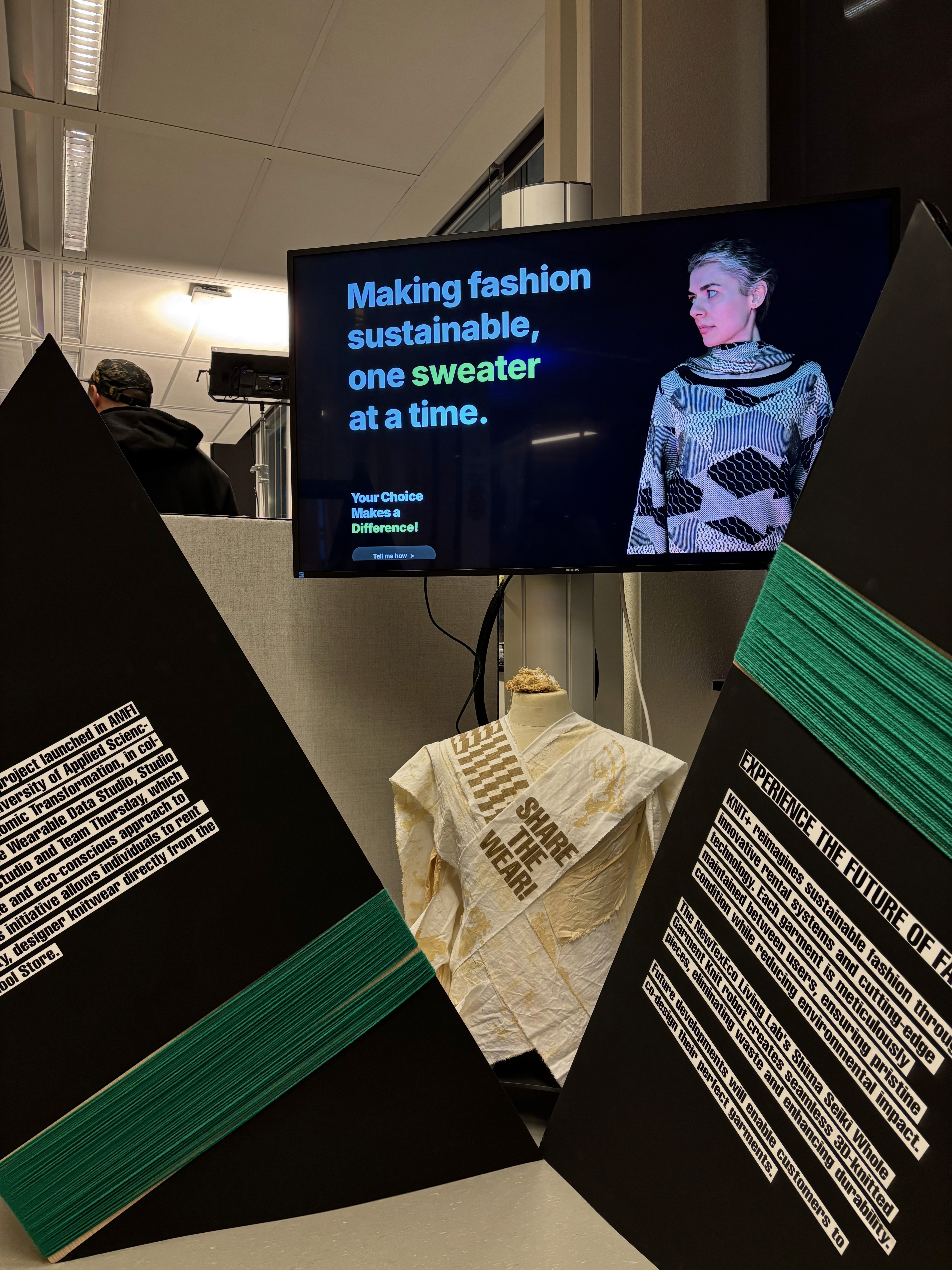
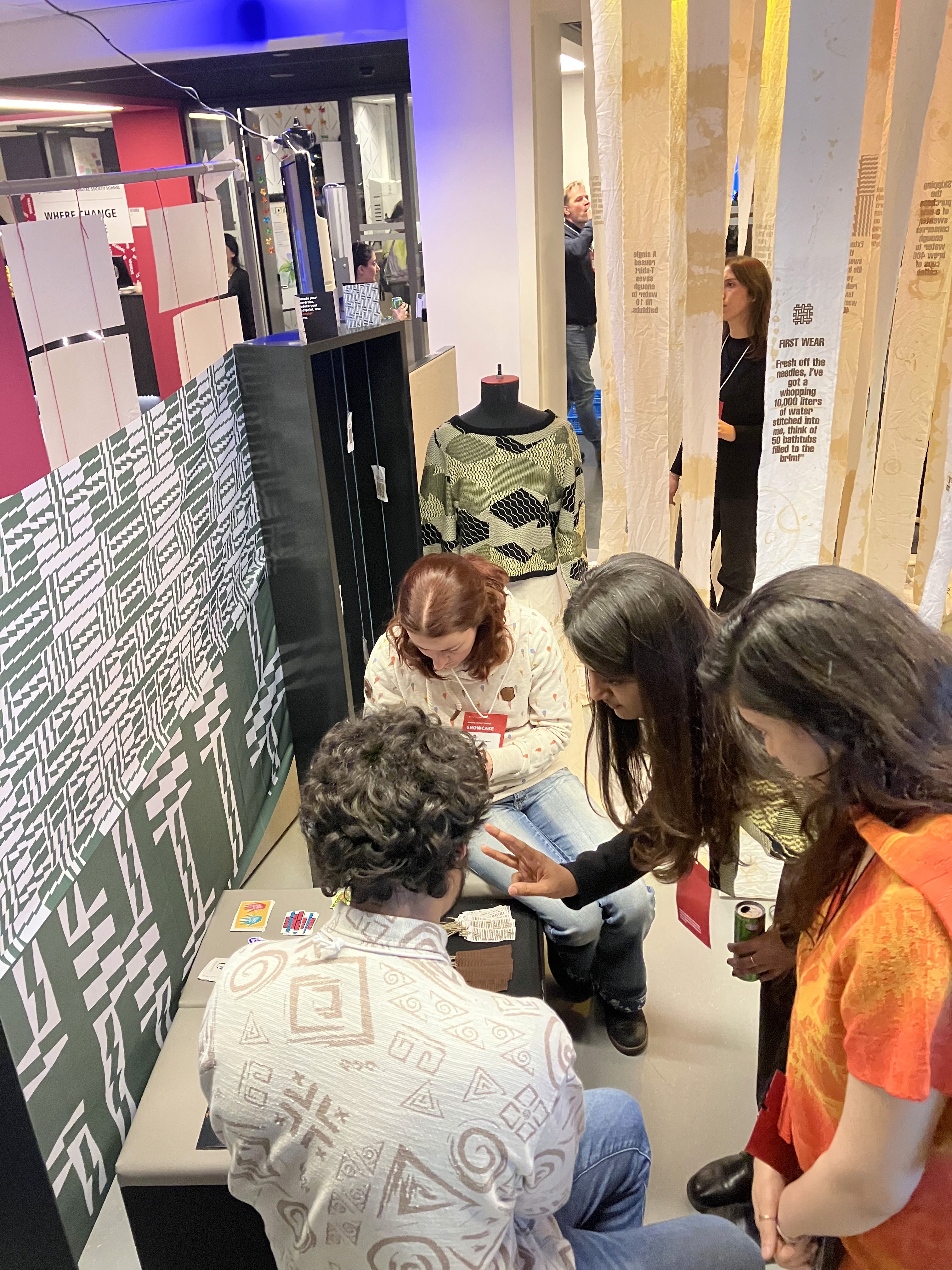
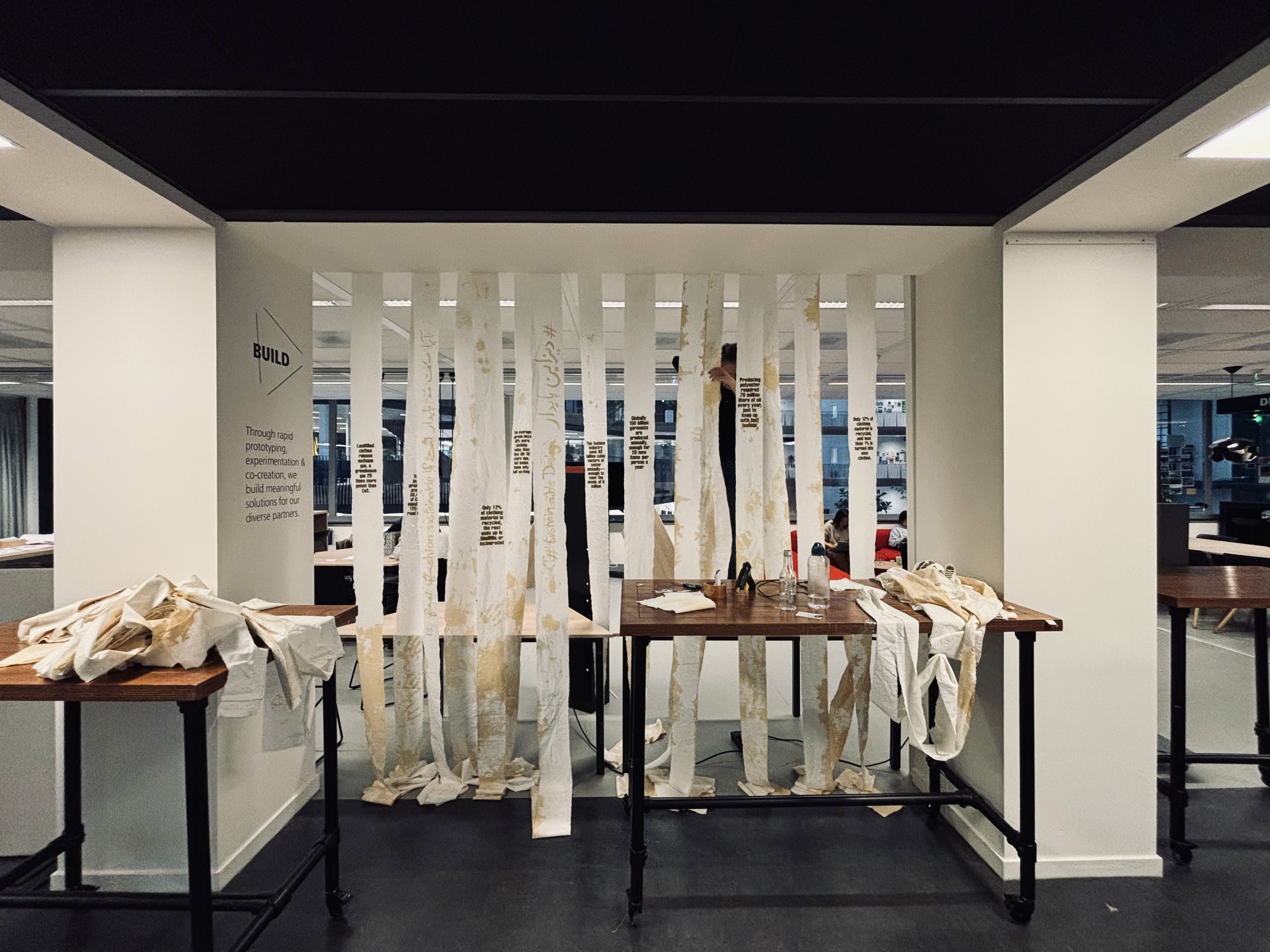
The display was made almost entirely from reclaimed waste collected around the university. Repurposed garments layered into the structure, sustainability facts laser-cut straight into the fabric instead of printed on a placard beside it, and a small interactive game so people would sit down instead of walking past.




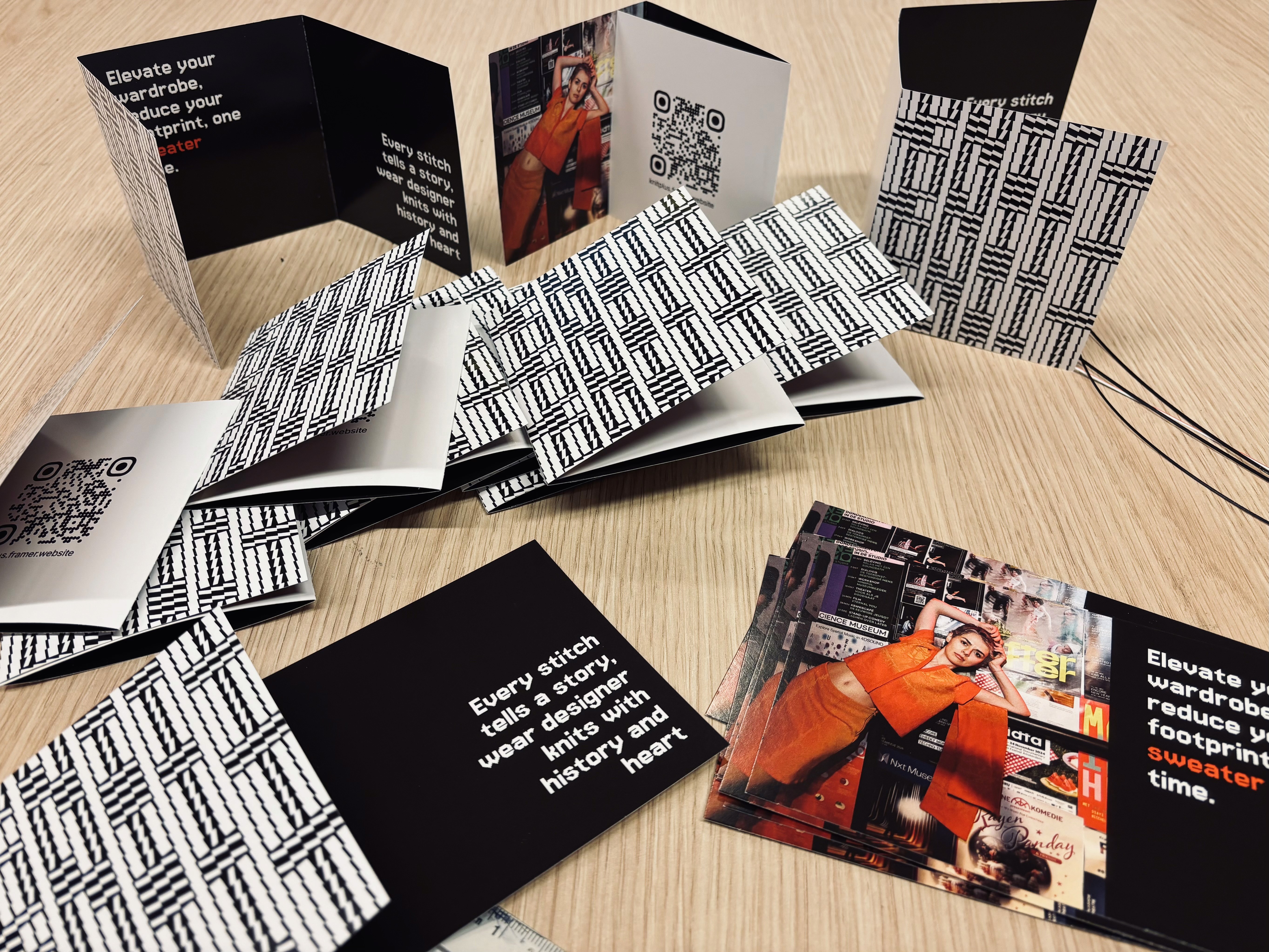
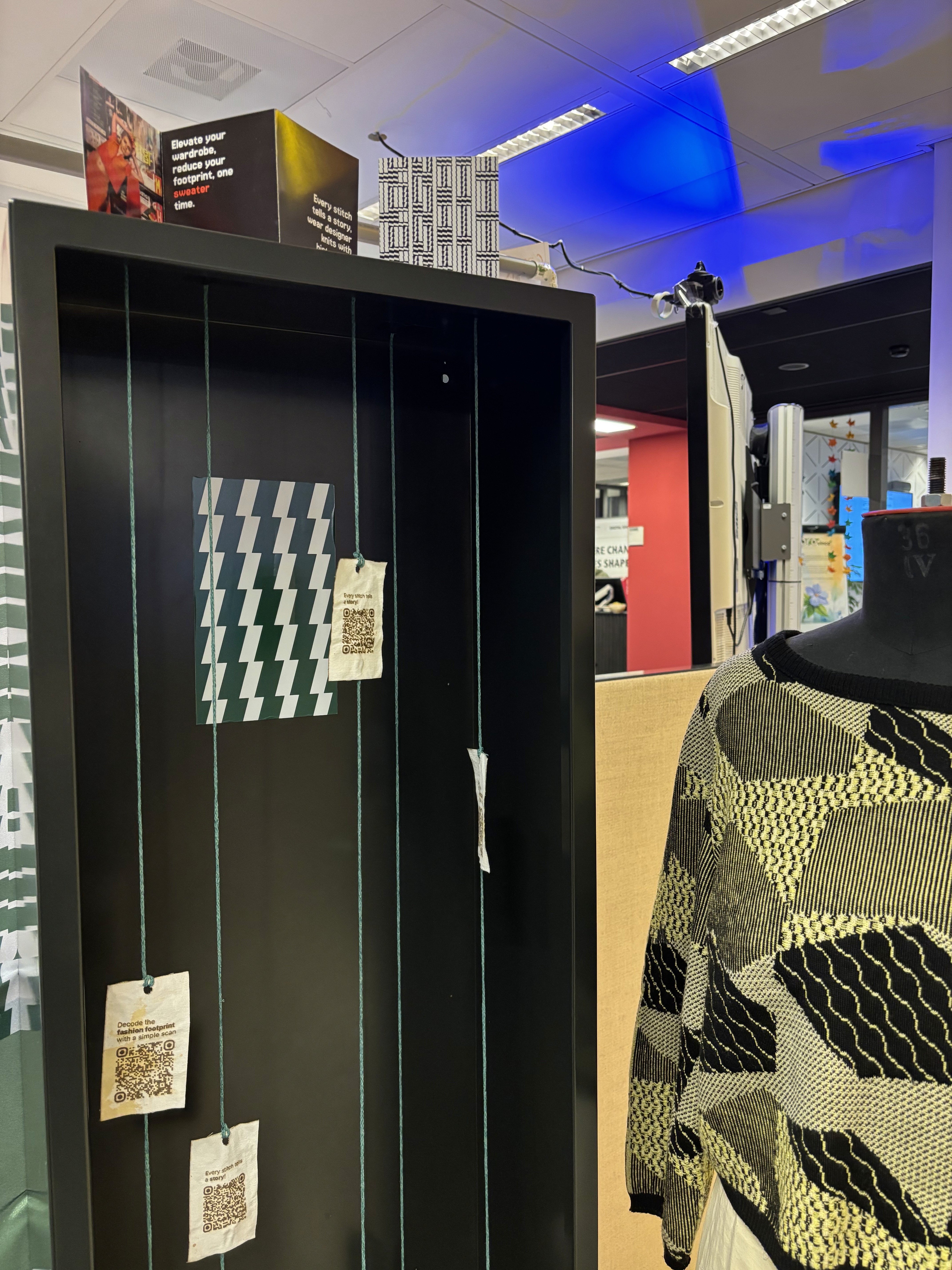
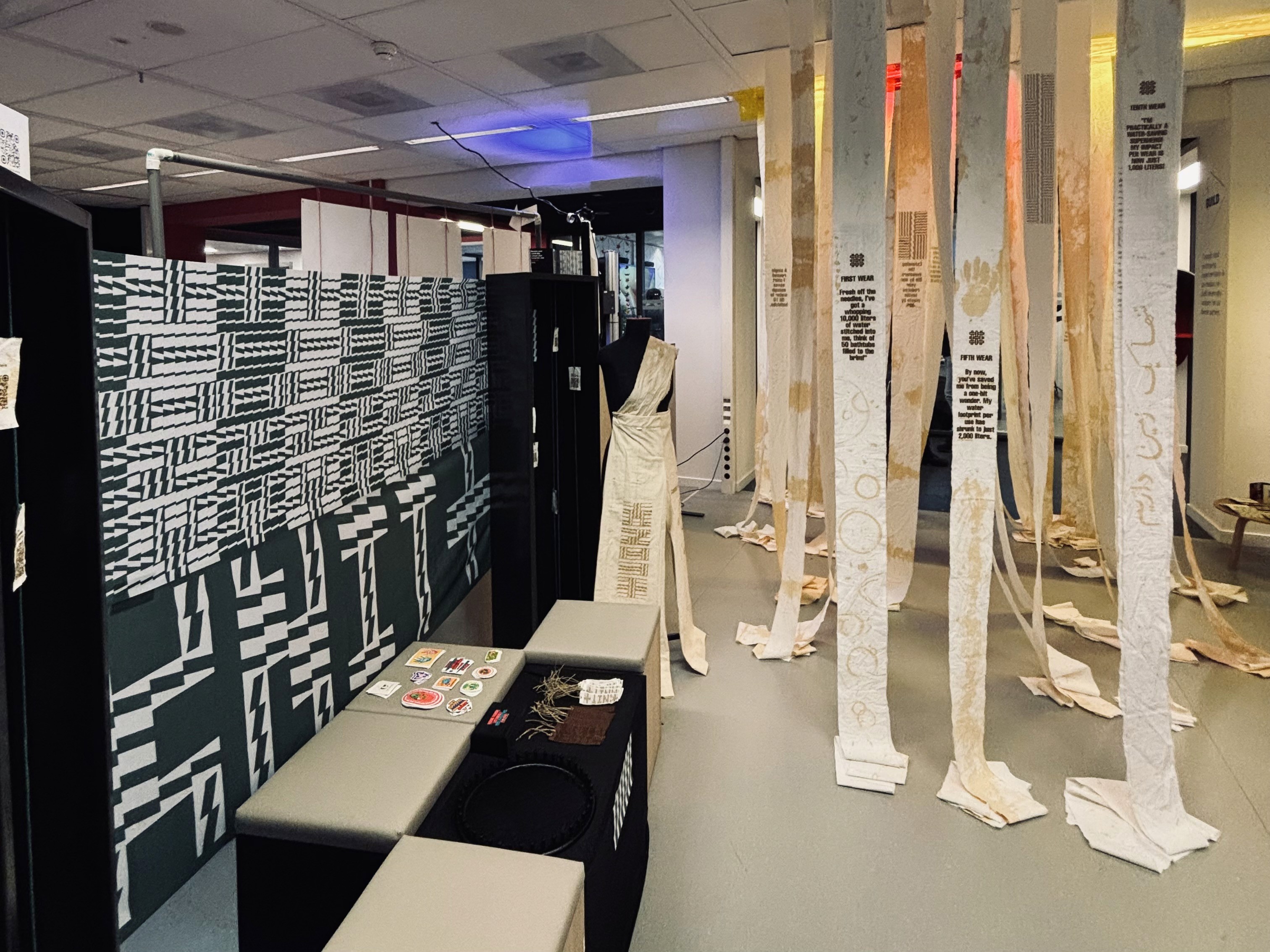
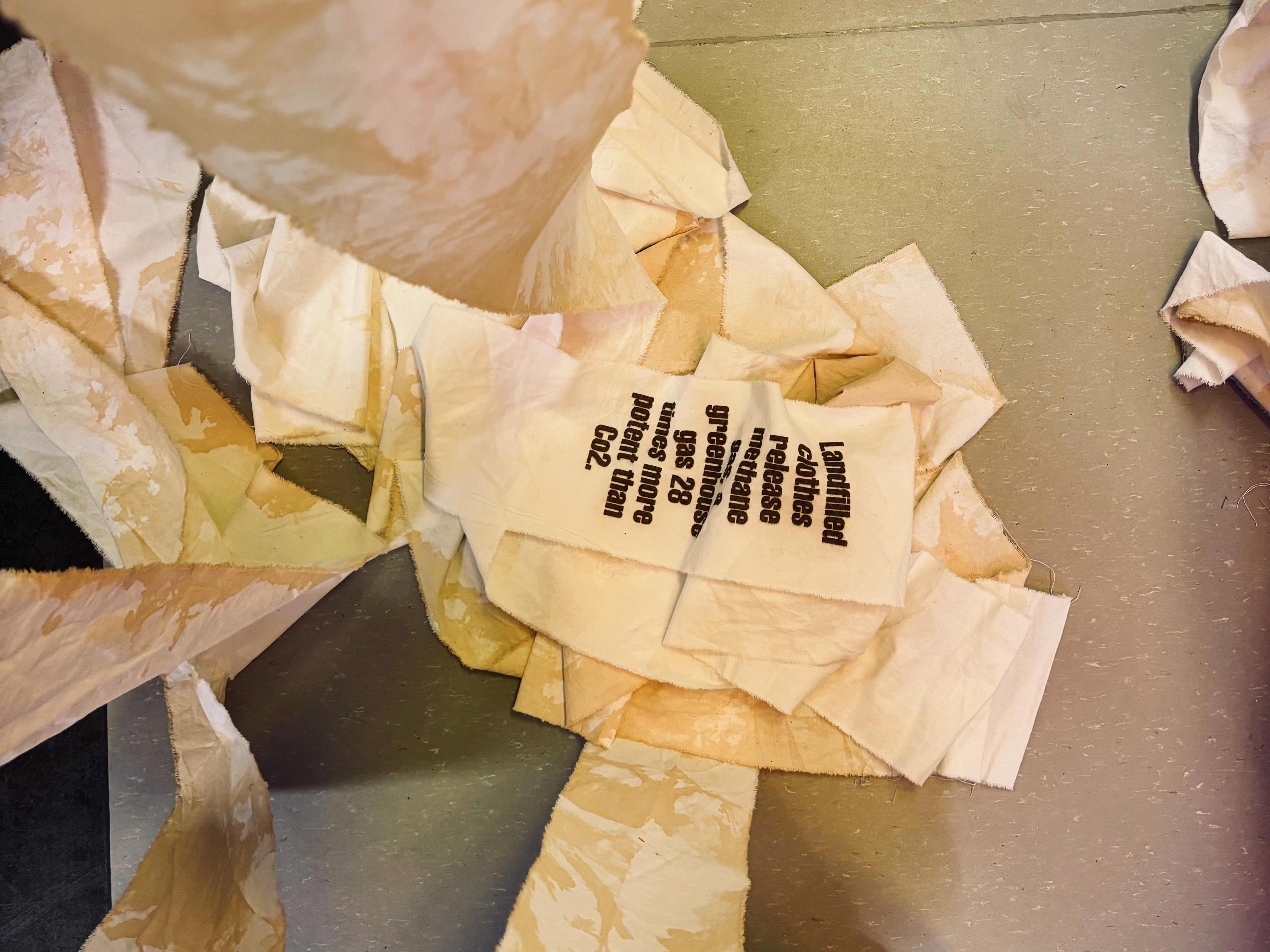
Garment Photo-Shoot
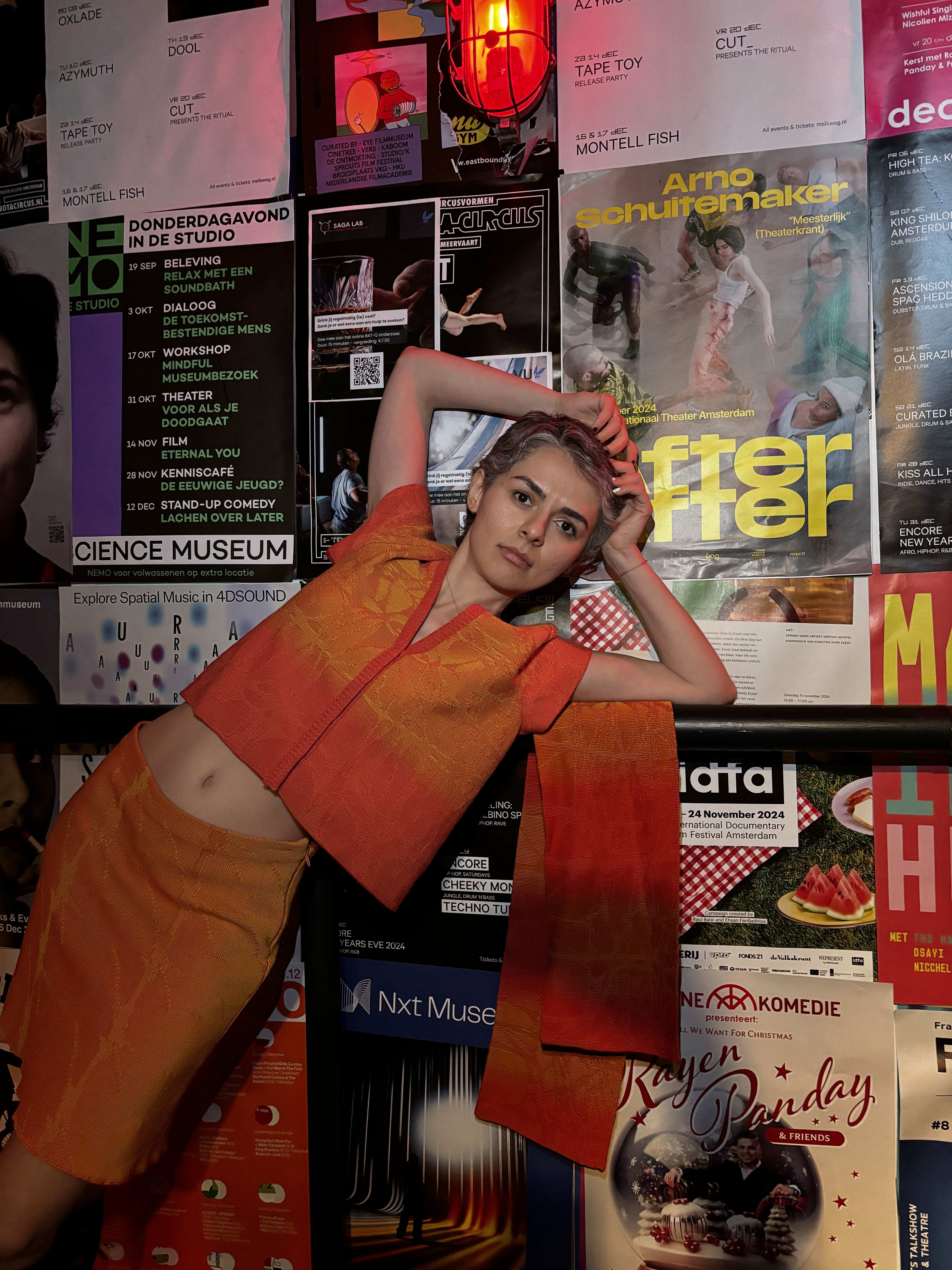
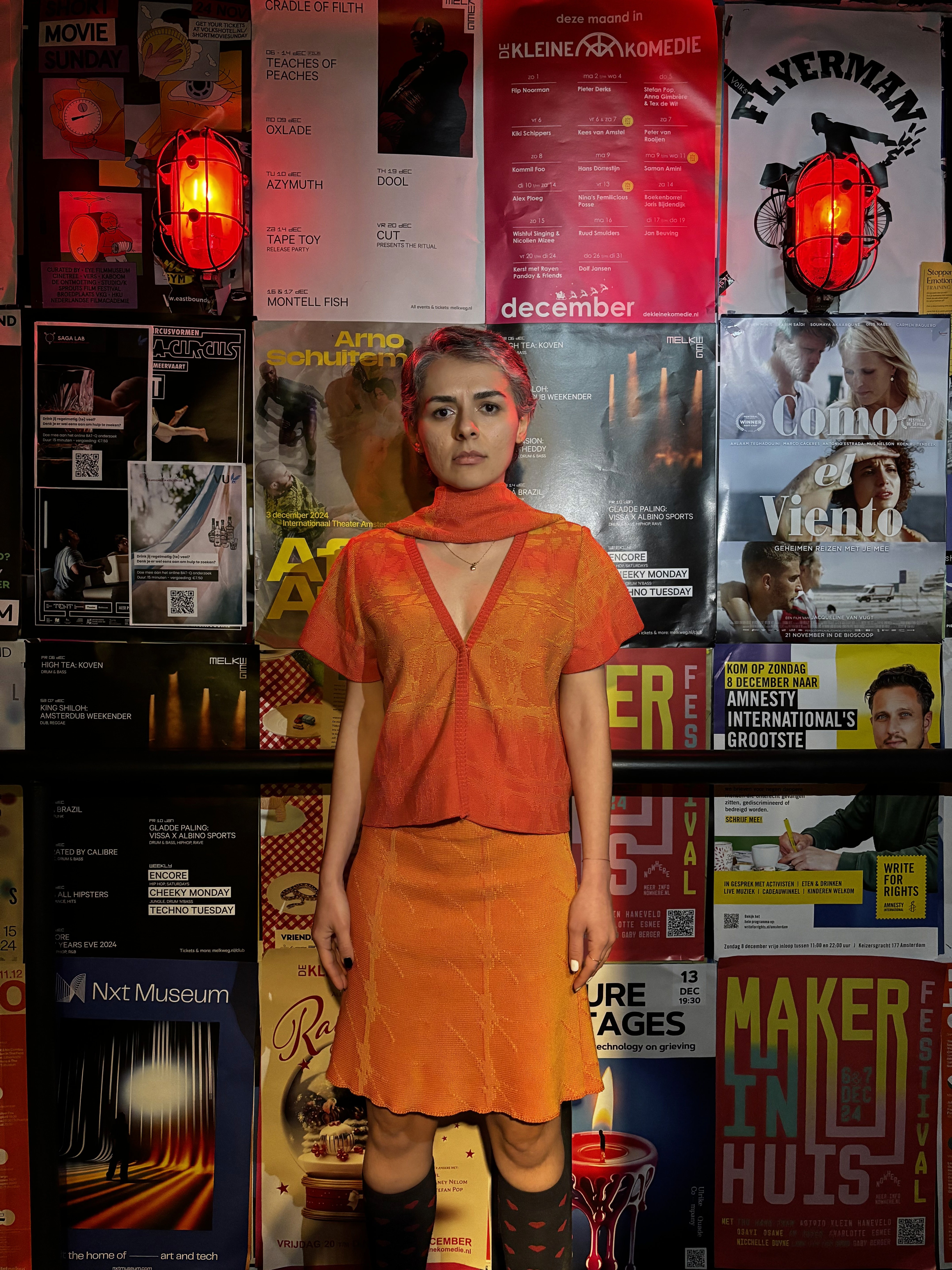


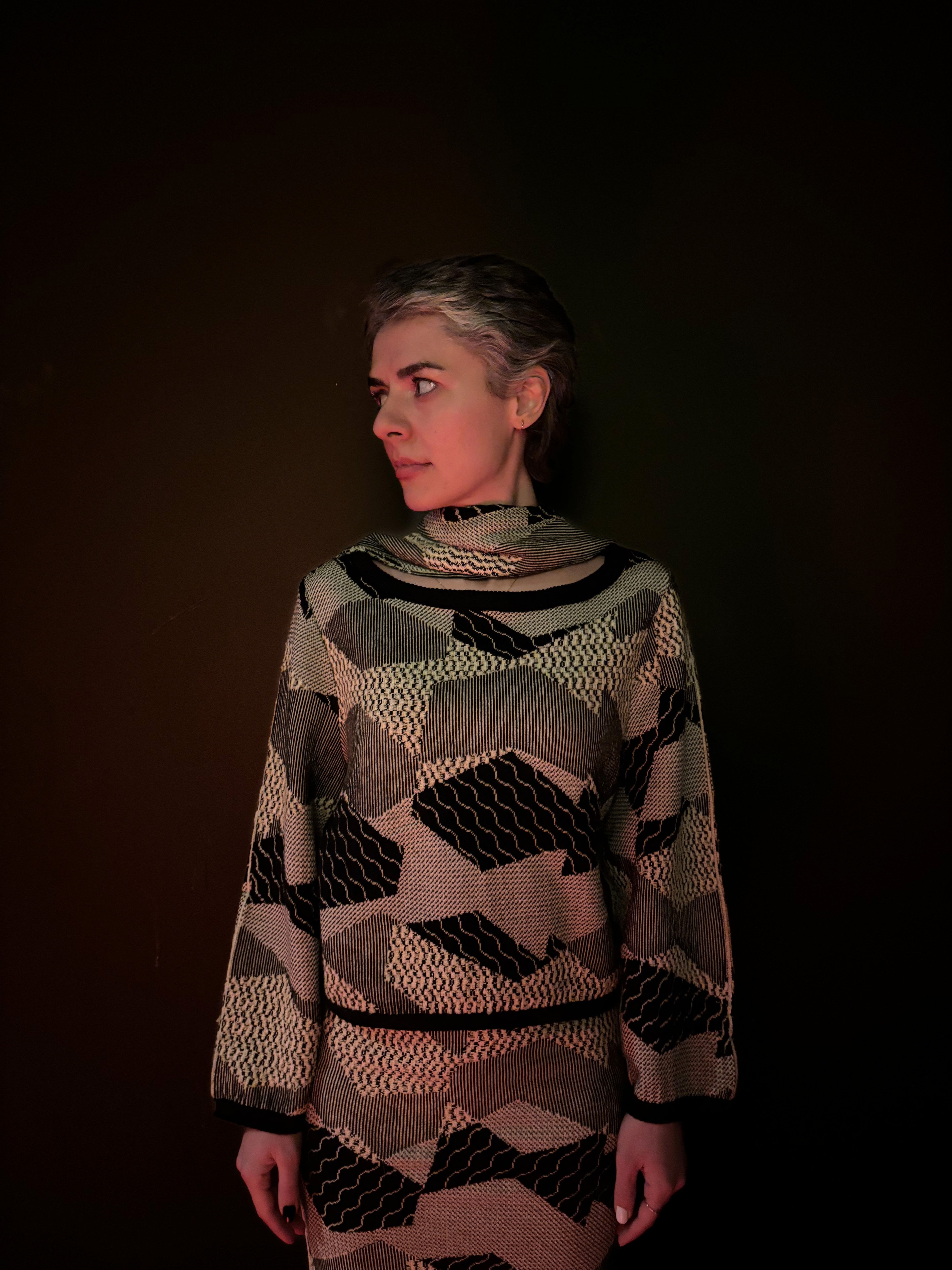
Explorations
Explorations
Explorations
Each part of it the process was drawn several ways, built as a working screen (tested with figma, now re-made with AI prototyping tools*) rather than a sketch, and set next to the alternatives. Nothing was deleted, so every version stayed available for comparison, and the final app is made of the pieces that survived that. This section is where the project took its shape: what was tried, what held up, and what the failures taught us.
*Click and play any of them to see the prototype
Passport Iterations
Pure editorial: type, rules, white space. No colour, no illustration. If the passport is a record, it should look like one.
Pure editorial: type, rules, white space. No colour, no illustration. If the passport is a record, it should look like one.
What worked: DIAL, All five measures in one shape, the wearer count in the middle where the answer belongs, and one measure opening at a time without losing the others. The regulator's record sits underneath it, so one page serves both readers.
What we discarded: the scrollable scale, which made you read to the end before anything meant anything, and the set of cards, which broke the figures into pieces that never added back up to a garment.
What worked: DIAL, All five measures in one shape, the wearer count in the middle where the answer belongs, and one measure opening at a time without losing the others. The regulator’s record sits underneath it, so one page serves both readers.
What we discarded: the scrollable scale, which made you read to the end before anything meant anything, and the set of cards, which broke the figures into pieces that never added back up to a garment.
What worked: DIAL, All five measures in one shape, the wearer count in the middle where the answer belongs, and one measure opening at a time without losing the others. The regulator's record sits underneath it, so one page serves both readers.
What we discarded: the scrollable scale, which made you read to the end before anything meant anything, and the set of cards, which broke the figures into pieces that never added back up to a garment.
Conceptual Passport
A few versions were not meant to ship. They were built to test what a passport could be if it stopped behaving like a document.
The receipt: The garment's impact printed like a till slip, with the making cost as the total and every wearer as a line item that reduces it.
The game: The figures handed over as a puzzle: 2,700 litres in front of you, split it between the people who wore it.
The QR assistant: The code from the collar given eyes and a mouth, the same object on the sweater and in the app. It still scanned with the face cut into it.
The receipt: The garment’s impact printed like a till slip, with the making cost as the total and every wearer as a line item that reduces it.
The game: The figures handed over as a puzzle: 2,700 litres in front of you, split it between the people who wore it.
The QR assistant: The code from the collar given eyes and a mouth, the same object on the sweater and in the app. It still scanned with the face cut into it.
Journey Iterations
The journey started as a list of stories. Too long to read, too flat to care about, no hook.
Then we mapped it: every stop joined by a traceable line from city to city. Accurate and useless. A route drawn in lines is a logistics diagram, and it told you about shipping, not people.
So we kept the positions and dropped the lines. What was left was a field, and it stopped being a route and became a garden: one flower per wearer, planted where it was planted, the order still there in the dates underneath.


Garden Iterations
Once we landed on the garden idea, we iterated how and where to display all the stories left behind.
I played around with the number of gardens, the body-copy, placement of the garment with which the story is associated and after a few rounds of iterations we landed on our preferred one. Infinite scroll and all united under one single garden and placing the return button onto the page, with an addition of a "watch it grow" button, to see how the garden blooms the more renters there are.
Once we landed on the garden idea, we iterated how and where to display all the stories left behind.
I played around with the number of gardens, the body-copy, placement of the garment with which the story is associated and after a few rounds of iterations we landed on our preferred one. Infinite scroll and all united under one single garden and placing the return button onto the page, with an addition of a “watch it grow” button, to see how the garden blooms the more renters there are.
Shelf/User Dashboard Iterations
The first versions were a loyalty card: badges, a rank, a bar filling toward a discount. It worked, and it felt like every points scheme you already ignore.
A badge scores you. What's worth counting here isn't spending, it's garments kept in circulation.
The first versions were a loyalty card: badges, a rank, a bar filling toward a discount. It worked, and it felt like every points scheme you already ignore.
A badge scores you. What’s worth counting here isn’t spending, it’s garments kept in circulation.
So the shelf became a bouquet. One flower per rank, the same flowers as the garden, on a card you keep. The first four ranks give you nothing but the flower. The prize waits at the fifth: ten garments held, half off your next rental.
Homepage Iterations
The home page:
Worked: one garment per screen, photo full width, with "worn by 04" where a "new" badge usually goes.
Discarded: the three-column grid, which made rented garments look like stock, and the story-led feed, which buried the thing you came to rent.
The home page:
Worked: one garment per screen, photo full width, with “worn by 04” where a “new” badge usually goes.
Discarded: the three-column grid, which made rented garments look like stock, and the story-led feed, which buried the thing you came to rent.
Learnings / Way-forward
Learnings / Way-forward
Learnings: Designing for circular behaviour requires more than surfacing sustainability data.
Throughout the project, I found that information alone rarely changes behaviour. Users may understand the environmental benefits of renting, but that understanding does not necessarily create attachment or long-term engagement.
The most valuable shift came from treating garments as carriers of stories rather than products. By combining behavioural nudges with emotional incentives, the platform moves beyond helping users make better choices and creates reasons to care about those choices over time.
I also learned that transparency is only useful when it is understandable. Translating Digital Product Passport data into tangible outcomes made complex lifecycle information more meaningful without sacrificing accuracy.
Way-Forward: The next step would be to validate how the Living Garment influences user behaviour over time.
Key questions include:
Does contributing stories increase attachment to rented garments?
Do wear counts, repairs, and provenance influence rental decisions?
Which impact metrics are most meaningful to users?
How does community participation affect garment circulation and retention?
I would also explore how the Digital Garden evolves as a collective layer of the platform, testing whether visualising community contributions strengthens participation and creates a stronger sense of stewardship around shared garments.
Ultimately, the ambition is to move beyond a rental platform and toward a system where garments accumulate cultural value through continued use, care, and contribution.
.say hello
Open to opportunities, feedback, or a
conversation. I'd love to hear from you :)
.say hello